Commercial truck-wash education / Six divisions
Understand the entire commercial truck-wash system.
Practical guidance for reducing downtime, improving wash consistency, controlling chemical and labor cost, protecting vehicle finishes, and avoiding expensive site and equipment mistakes. Six divisions. Six connected Colleges. One shared facility model.
TRUCK WASHPlan / Build / Run
- IDevelopSite and project
- IISystemsEquipment and controls
- IIIScienceChemistry and water
- IVOperatePeople and process
- VMaintainReliability and service
- VIComplySafety and environment
01
Six divisions
Role-specific entry points
02
Six Colleges
One connected curriculum
03
Open access
Published reference, free to read
04
Open reference
Published and free to read
Six ways into the industry
Choose the division that matches the decision in front of you.
Start with curriculum, technical training, project development, investment diligence, fleet training, or industry research. Each division connects back to the same commercial truck-wash operating system.
TWU / 01
University
Six Colleges connecting development, systems, chemistry, operations, maintenance, and compliance.
TWU / 02
Technical Academy
Hands-on training for the people who install, commission, maintain, and repair wash systems.
TWU / 03
Business School
Educational frameworks for feasibility, site selection, project planning, and operating fundamentals.
TWU / 04
Investor Academy
General education on revenue models, cost categories, risk questions, and due diligence.
TWU / 05
Fleet Academy
Planned learning for employers, fleet teams, managers, supervisors, and multi-location operations.
TWU / 06
Research Institute
Definitions, source-aware explainers, market-study methodology, and future research resources.
Choose your route
What are you trying to understand?
Open the route that best matches your current decision. Each answer points to one primary division and a clear next step.
I am planning or evaluating a commercial wash.
Start with general feasibility, market, development, and operating-decision education.
I want to understand wash systems or operating fundamentals.
Start with the six-College curriculum architecture and planned learning pathways.
I am evaluating an opportunity or conducting diligence.
Use the educational diligence framework. It does not provide investment, legal, tax, or financial advice.
I need education for a fleet, employer, or multi-location team.
Review the planned workforce and organization-level learning route.
I install, maintain, or repair wash equipment.
Start with the hands-on technical training route for installation, diagnostics, and service.
I need definitions, methods, or source context.
Use the Research Institute and glossary for source-aware reference material.
One connected system of knowledge
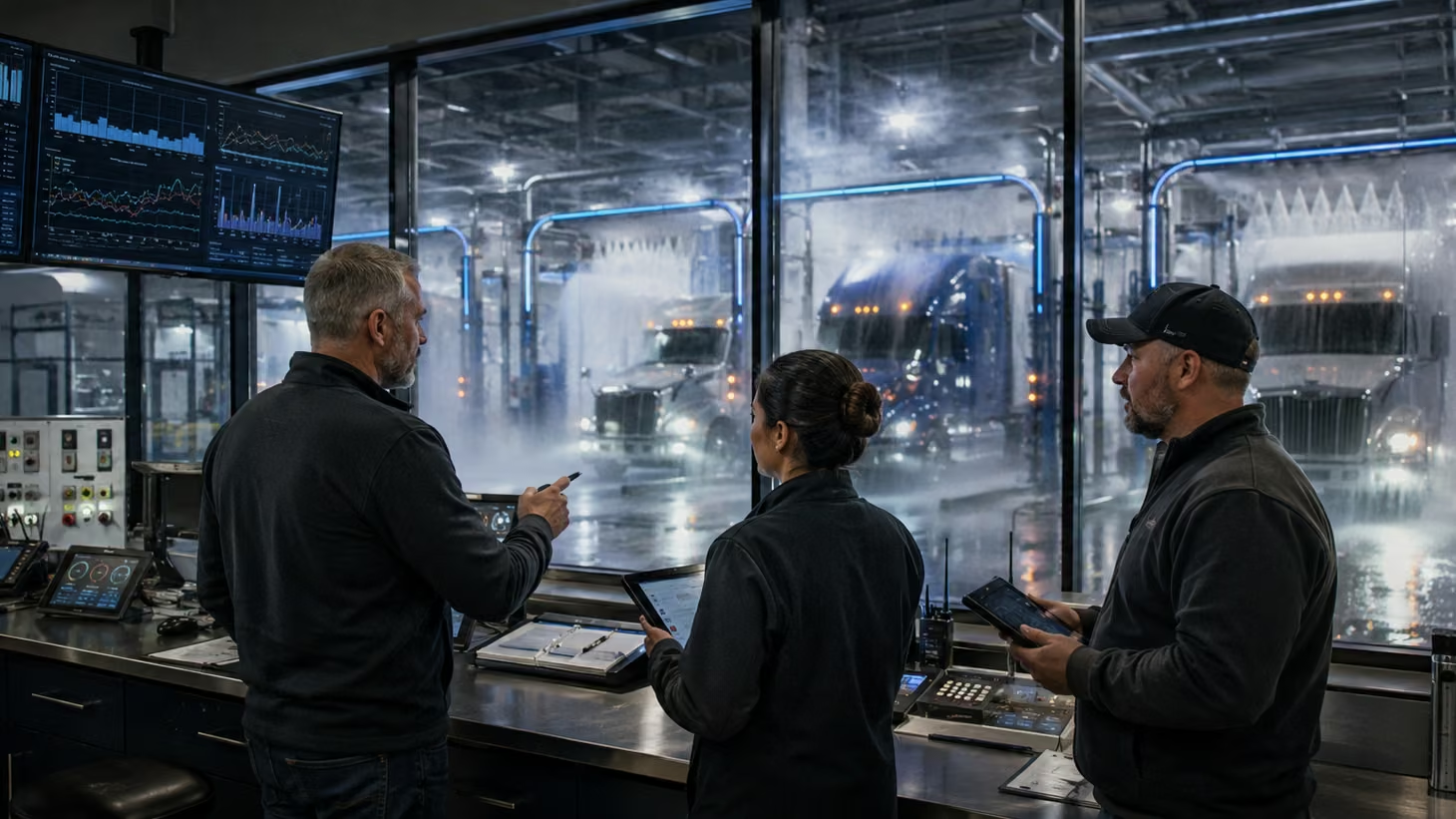
Every role, taught in the context of the whole facility.
From the first site question to daily wash operations, TWU’s six divisions are being built around one shared model of how a commercial truck wash actually works.
Six planned Colleges
One facility. Six connected disciplines.
I
Feasibility and Development
Market, site, capital, permitting, design, and project delivery.
II
Wash Systems and Equipment
Pressure, gantry, tunnel, plumbing, controls, and specialty systems.
III
Chemistry and Water Science
Chemical process, water quality, reclaim, safety, and cost control.
IV
Operations and Business Management
Daily operation, fleets, finance, people, pricing, and growth.
V
Maintenance and Technical Services
Preventive work, systems maintenance, facilities, and diagnostics.
VI
Environmental, Safety, and Compliance
Wastewater, stormwater, worker safety, chemical storage, and conservation.
Interactive facility system
Explore the six connected learning domains.
The explorer shows how the six Colleges relate across the commercial truck-wash facility lifecycle. Open a domain to review its intended scope. Each domain lists the subjects that College covers.
01 / Feasibility and Development
Site evaluation, demand context, development sequence, permitting awareness, project planning, and general decision frameworks.
02 / Wash Systems and Equipment
Major wash configurations, components, controls, equipment relationships, operating concepts, and system selection context.
03 / Chemistry and Water Science
Chemical roles, water quality, reclaim concepts, dosing awareness, surface compatibility, and process monitoring foundations.
04 / Operations and Business Management
Daily operations, people, customer experience, process control, budgeting awareness, reporting, and business-management foundations.
05 / Maintenance and Technical Services
Preventive maintenance, inspection, troubleshooting logic, parts awareness, service documentation, and technical coordination.
06 / Environmental, Safety, and Compliance
Environmental awareness, workplace safety, documentation, authority coordination, and the limits of general educational guidance.
From diagram to daily operation
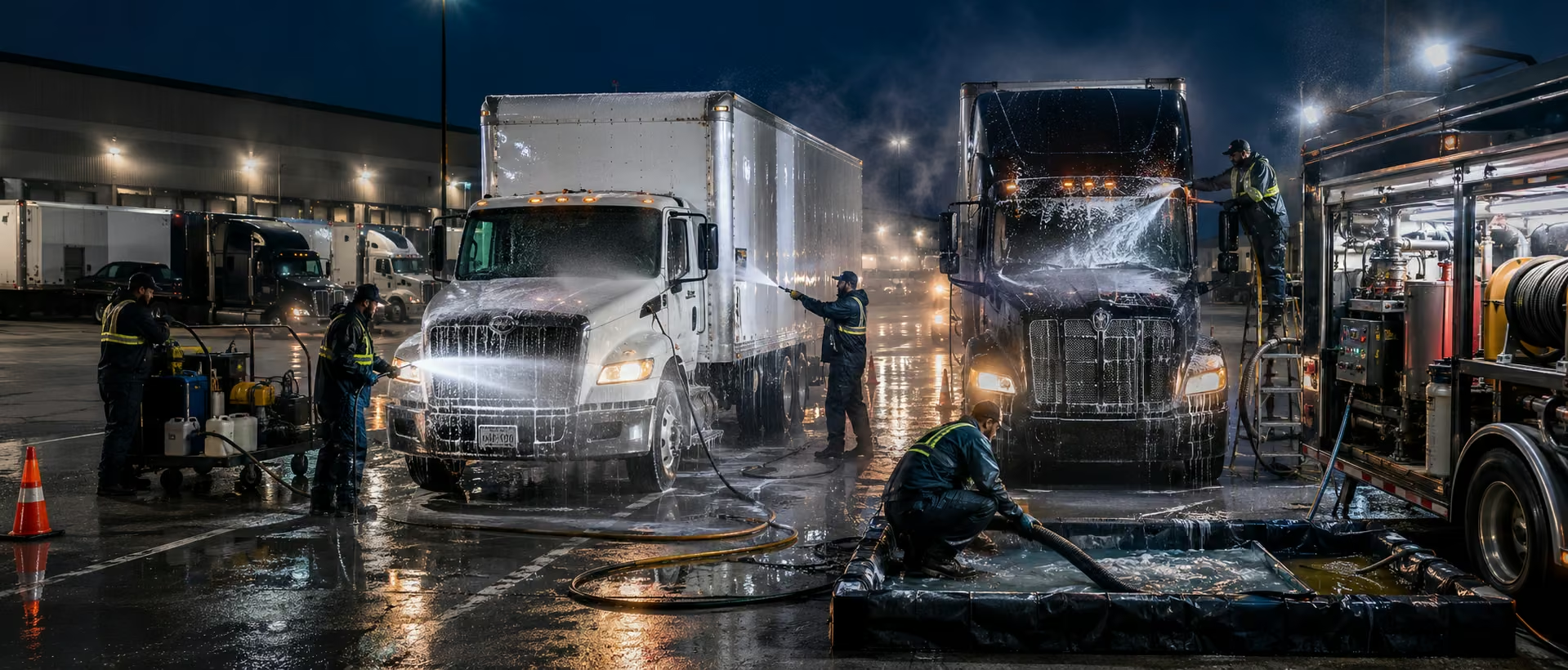
Every system changes the work around it.
Equipment, chemistry, water, people, maintenance, safety, and environmental decisions operate as one connected facility. TWU’s planned learning model keeps those dependencies visible instead of teaching each role in isolation.
The TWU model at a glance


The publication standard
Clear status. Direct answers. Verifiable facts.
Truck Wash University separates available information from planned programs. Factual claims should identify their source or review status, and regulated subjects should direct readers to the applicable authority instead of presenting general education as local compliance advice.
01
Answer first
Major pages open with a concise response to the visitor’s primary question.
02
Show status
Programs, formats, credentials, and research are labeled according to what exists now.
03
Expose context
Related pages, definitions, update notes, and source information support deeper review.
04
Respect limits
No enrollment, credential, accreditation, or operating-course claim is made before it is approved and implemented.
Request information
Have a project, a fleet, or a question in mind?
Tell us whether you are planning a site, improving an operating wash, maintaining equipment, or training a fleet team. Include your role, market, and the decision in front of you.