University · College III
College III: Chemistry and Water Science
This college covers the chemistry that cleans trucks and the water systems that supply and recycle a wash. It works through detergents and presoaks, pH and surfactants, water quality and hardness, reclaim and recycling, effluent and discharge parameters, and dilution control, connecting how soils are removed to how water is treated and reused.
Cleaning a commercial truck is a chemical process before it is a mechanical one. Water carries and activates the products, the products break the bond between soil and surface, and the wash then has to deal with the water it used. College III treats those three things as one system. It looks at what the chemicals do, what the water needs to be to let them work, and where that water goes after it runs off the vehicle. The knowledge areas below describe the subjects the field covers, written for operators, technicians, and managers who want to understand why a wash produces the result it does.
Wash Chemistry Fundamentals
Every cleaning product works somewhere on the pH scale, which runs from strongly acidic to strongly alkaline with neutral water in the middle. Alkaline chemistry lifts organic road film, grease, and diesel soot, while acidic chemistry cuts through mineral scale, brake dust, and hard-water film. Surfactants are the active molecules that make either type work: one end grips oily soil and the other end holds onto water, so the soil is loosened, surrounded, and rinsed away instead of smearing. Understanding where a product sits on the pH scale, and what soil it is built to attack, is the foundation for every other decision on this page.
- The pH scale from 0 to 14, and why acidic and alkaline products remove different soils
- How surfactants reduce surface tension so water can wet and lift road film
- The role of dwell time, temperature, and agitation in breaking the soil to surface bond
- Why the wrong pH for a given surface can dull, etch, or streak instead of clean
Presoaks, Detergents, and Finishing Products
A wash is a sequence of products, each with a job. The presoak goes on first and does the heavy chemical work, softening and releasing baked-on film before anything touches the surface, which is what makes touchless washing possible. The main detergent carries the surfactants that suspend and rinse the loosened soil. Finishing products come last: drying agents and rinse aids that sheet water off the panels so the vehicle dries with fewer spots and less streaking. Knowing what each product is for, and the order it belongs in, prevents the common mistake of asking one chemical to do the work of three.
- Presoaks and the two-step touchless approach that pairs an alkaline pass with an acidic pass
- Detergents and how surfactant blends are matched to the soil and the surface
- Drying agents and rinse aids that sheet water off panels to reduce spotting
- Sequencing and dwell so each product does its job before the next one is applied
Water Quality and Hardness
Water is not a neutral ingredient. Hard water carries dissolved calcium and magnesium, and those minerals fight the chemistry: they bind to surfactants, so more product is needed to get the same result, and they dry onto the vehicle as the white spotting that shows up worst on dark paint and glass. Softening removes those minerals through ion exchange before the water reaches the wash, which lets detergents work at their rated dilution and cuts spotting. This college covers how hardness is measured, how it changes the result even when the equipment is running perfectly, and where softening or spot-free rinse belongs in the process.
- Hardness, total dissolved solids, and pH, and how each is measured
- Why hard water raises chemical use and leaves mineral spots on a finished vehicle
- Water softening by ion exchange and where it fits ahead of the wash
- Spot-free rinse using reverse osmosis or deionization for a mineral-free final rinse
Water Reclaim and Recycling
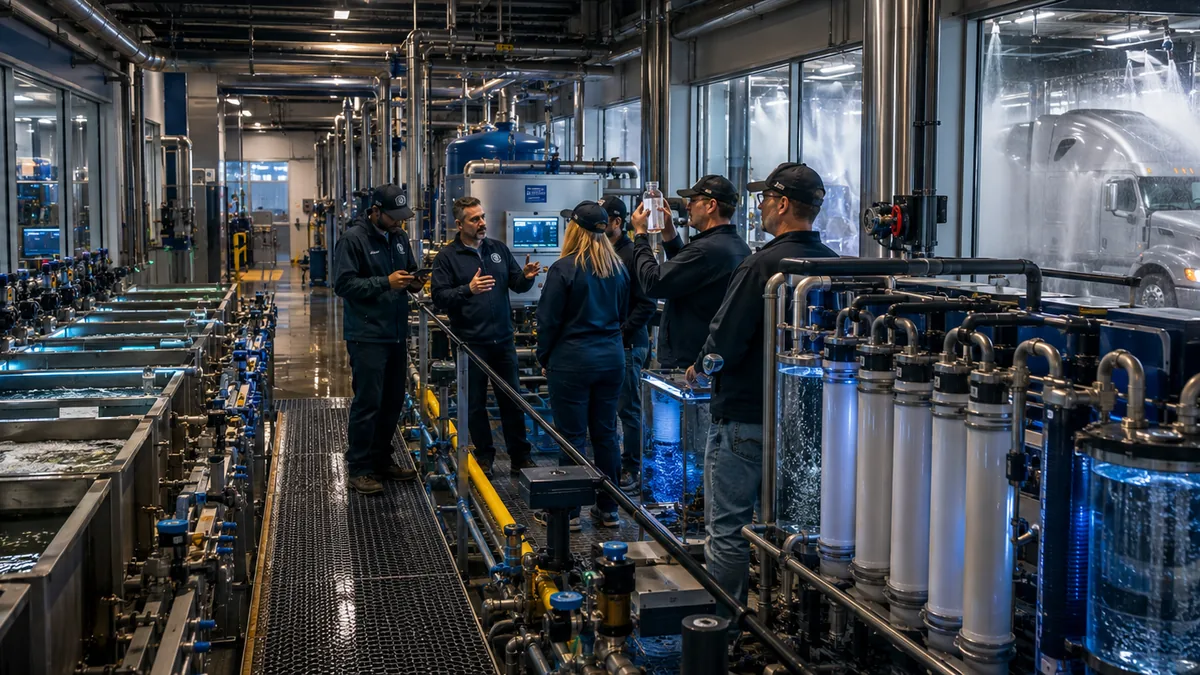
A commercial wash uses a large volume of water per vehicle, and a reclaim system captures the runoff, cleans it, and sends it back to be used again. Reclaim usually works in stages: heavier solids settle out first, oil and grease separate off, and filtration removes the finer material, so the recovered water is fit to reuse on the next wash. A well-run reclaim system cuts fresh-water demand and lowers the volume that has to be discharged, which reduces both water cost and the load on the drain. This subject connects directly to the systems covered in College II: Wash Systems and Equipment.
- How reclaim captures, treats, and returns wash water to reduce fresh-water use
- Settling, oil and grease separation, and filtration as the common treatment stages
- Where reclaimed water can be reused, and where fresh or spot-free water is still required
- How reclaim affects water cost, discharge volume, and daily consumption
Effluent and Discharge Parameters
Whatever a wash does not reclaim has to go somewhere, and the water leaving the site is regulated because of what it carries. The parameters that matter most are oil and grease, total suspended solids, and pH, since these are what a sewer authority or environmental permit sets limits on. Oil and grease can foul a public system, suspended solids settle and clog it, and water that is too acidic or too alkaline can corrode pipes and disrupt treatment downstream. Understanding these parameters is what connects wash chemistry to the rules a facility has to meet, covered in depth in College VI: Environmental, Safety, and Compliance and in the permits and compliance guidance in the Business School.
- Oil and grease, total suspended solids, and pH as the core discharge parameters
- Why each parameter is limited and how it affects a sewer system or receiving water
- How pretreatment, an oil and water separator, and reclaim help meet discharge limits
- How local permits and sewer-use rules set the numbers a site must stay within
Dilution Control and Dosing
Concentrated chemicals are shipped strong and meant to be diluted, and the dilution ratio is where cost and quality are won or lost. Metering and dosing equipment mixes product with water at a set ratio, so every vehicle gets the same concentration instead of relying on a guess at the drum. Get it right and the wash is consistent and the cost per vehicle is predictable. Over-dose and money runs down the drain along with a heavier chemical load on the discharge; under-dose and the trucks come out dirty. Accurate dosing is also a safety practice, because it keeps concentrated product handled by equipment rather than poured by hand. Definitions for the terms used across this college are collected in the glossary.
- Dilution ratios and how metering and dosing equipment holds them steady
- Calculating cost per wash from concentrate cost and dilution
- How consistent dosing keeps results even across shifts and operators
- Why controlled dosing reduces waste, over-concentration, and hand-handling of product
Frequently asked questions
What chemicals does a truck wash use?
Most washes use a presoak to release heavy road film, a surfactant-based detergent to lift and rinse the soil, and a finishing product such as a drying agent to sheet water off the vehicle. Alkaline products handle organic film and grease, while acidic products cut mineral scale and brake dust. The right mix depends on the soil, the surface, and the local water.
What does a water reclaim system do?
A reclaim system captures the water that runs off the vehicle, treats it by settling out solids, separating oil and grease, and filtering the finer material, then returns it to be used again. This reduces how much fresh water the wash draws and lowers the volume it has to discharge, cutting both water cost and the load on the drain.
How does hard water affect wash results?
Hard water carries dissolved calcium and magnesium that bind to surfactants, so a wash needs more chemical to reach the same result, and those minerals dry onto the vehicle as white spots that show worst on dark paint and glass. Softening the water or using a spot-free final rinse addresses both the higher chemical use and the spotting.
Is truck wash water regulated?
Yes. Water discharged from a wash is regulated, usually on oil and grease, total suspended solids, and pH, because those are what can foul a sewer system or receiving water. Local permits and sewer-use rules set the specific limits, and pretreatment, an oil and water separator, and reclaim are common ways a site stays within them. College VI covers this in detail.
What this covers: The subjects below make up this College. Content here is educational and describes the knowledge areas the field covers; it is not enrollment, certification, or professional advice. Always follow product safety data sheets and local regulations when handling chemicals.