
A water reclaim system captures water already used in the wash process, separates and filters it, and redirects the reclaimed water back into functions like prewash or undercarriage rinsing. A properly operated reclaim system reduces how much fresh water a facility draws and how much wastewater it discharges, while spot-free finishing functions still typically run on fresh or specially treated water.
What a reclaim system does
Commercial truck washing uses a meaningful volume of water across prewash, wash, rinse, and finishing stages. A reclaim system is built to capture water from the stages where water quality matters less, treat it enough to reuse safely, and send it back into the process instead of down the drain. This does not eliminate the need for fresh water. It reduces demand on it, and it reduces the volume of wastewater a facility has to manage or discharge.
The components of a typical reclaim system
- Settling or separation: a first stage where heavier solids and free oils separate out of the used wash water before further treatment
- Filtration stages: progressively finer filtration that removes suspended solids the settling stage does not catch
- Storage: a holding tank or reservoir that buffers reclaimed water between when it is produced and when it is used again
- Redistribution to wash functions: pumping reclaimed water back to the stages of the wash process suited to it, typically prewash and undercarriage rinsing rather than final finishing
- Discharge management: handling for the water and solids the reclaim system does not or should not reuse, which still has to meet applicable discharge requirements
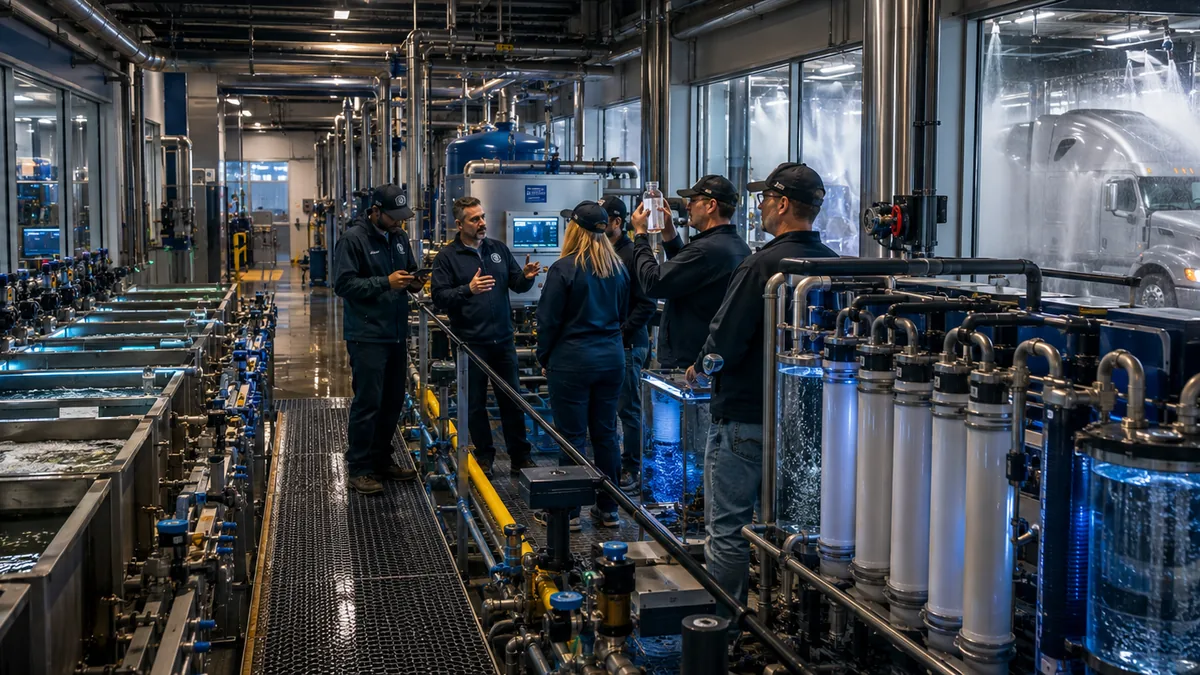
How reclaimed water typically moves through a facility
- Capture. Used wash water drains from the bay into the reclaim system’s intake rather than directly to sewer or discharge.
- Separation and settling. Heavier solids and free oils separate out first, reducing the load on the filtration stages that follow.
- Filtration. The water passes through progressively finer filtration to remove remaining suspended solids.
- Storage. Treated water holds in a reservoir until a wash function calls for it.
- Reuse. The system redirects reclaimed water to functions like prewash or undercarriage rinsing, while spot-free finishing draws from fresh or specially treated water instead.
Why this connects to water quality and chemistry
Reclaim does not operate independently of the rest of a facility’s water and chemistry decisions. Reclaimed water still has to be clean enough for its intended reuse, chemical dosing has to account for whatever is already present in reclaimed water, and a poorly maintained reclaim system can introduce odor or spotting problems into stages downstream. Treating reclaim as one part of an integrated water system, rather than a separate add-on, is generally what keeps both cost control and wash quality intact.
Key terms at a glance
Reclaim system
Equipment that captures, treats, and redirects previously used wash water back into the process instead of discharging it.
Spot-free rinse
A final rinse using reverse osmosis or deionized water to reduce mineral spotting on a finished vehicle.
Total dissolved solids
A measure of dissolved minerals and other substances in water, relevant to both source water and reclaimed water quality.
NPDES permit
A federal Clean Water Act permit framework some facilities may need depending on their discharge activities, typically administered locally by a state environmental agency.
Full definitions for these and other water and chemistry terms are available in the Glossary.
Where this fits in the curriculum
Reclaim and cost control is one of the planned learning areas in College III: Chemistry and Water Science, alongside water quality fundamentals, chemical selection, application and dosing, spot-free rinse systems, and chemical handling and safety. College III also connects directly to the compliance topics in College VI.
Status: This article explains reclaim systems at a conceptual level. Chemistry and water topics will be reviewed by a qualified technical source before any specific product, process, or performance claim is published on this site.
Frequently asked questions
Does a reclaim system eliminate the need for fresh water?
No. A reclaim system reduces fresh-water demand and wastewater discharge, but spot-free finishing stages typically still require fresh or specially treated water.
Is reclaimed water used for every stage of the wash?
Generally not. Reclaimed water is typically directed to stages like prewash and undercarriage rinsing, where water quality requirements are lower, rather than final spot-free finishing.
How does reclaim affect chemical use?
Chemical dosing has to account for what is already present in reclaimed water, so reclaim and chemistry decisions are typically evaluated together rather than separately.
Where can I learn more about this topic?
College III: Chemistry and Water Science covers reclaim, water quality, and chemical selection in more depth as part of the planned University curriculum, and the Glossary defines the terms used throughout water and chemistry topics.